Published:
How to Meal Plan: A Simple Weekly System Using Recipes You Already Have
Meal planning sounds organised in theory. In practice, it can become one more thing to organise.
You open a blank calendar on Sunday, try to invent seven dinners, remember that Wednesday is busy, wonder whether the spinach will survive until Friday, and decide to deal with dinner tomorrow.
A useful meal plan does not need to predict the whole week perfectly. It needs to answer enough questions in advance that dinner is not a new problem every evening.
What meal planning is actually for
A weekly meal plan can reduce last-minute decisions, make one grocery trip more deliberate, bring favourite recipes back into rotation, and make room for leftovers and evenings when nobody cooks. It is a useful default, not a contract. If Tuesday's pasta moves to Wednesday, the plan still did its job.
Start with your calendar, not your recipe collection
Before choosing meals, look at the week ahead. Mark late workdays, dinners away, travel, and nights when the kitchen needs to be quick. Then give the remaining evenings a loose role:
- normal cooking night — enough time for a familiar dinner;
- quick night — something with little preparation;
- leftovers night — a deliberate use for food already cooked;
- flex night — leave it open for plans changing, takeaway, or food that needs using.
This prevents the common mistake of planning seven ambitious dinners for a week with only three realistic cooking evenings.
Choose a few anchor meals first
Do not fill every box immediately. Start with three or four meals you would genuinely be happy to cook: sheet-pan chicken on Monday, lentil curry on Tuesday, mushroom pasta on Thursday, pizza on Saturday. The remaining slots can be eggs, soup, sandwiches, freezer food, leftovers, or eating out.
If you keep recipes digitally, a saved collection turns “What should I cook?” into a smaller question: “Which recipe I already saved fits Thursday?”
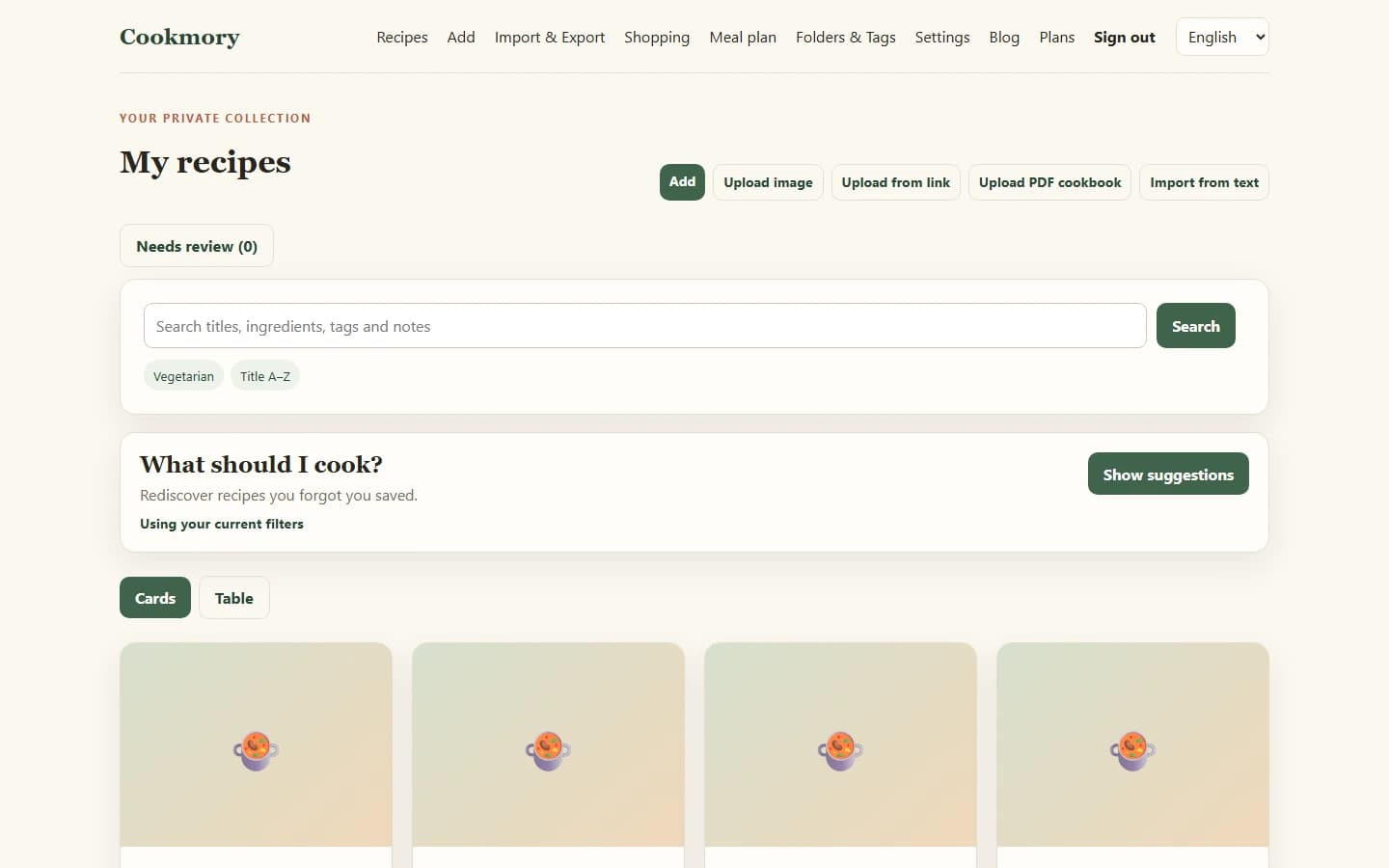
If recipes are still split between bookmarks, screenshots, and notes, start with how to organize recipes digitally. A few broad folders, useful tags, and search are enough to make weeknight choices easier.
Plan around ingredients that overlap naturally
Planning becomes simpler when meals share a few ingredients without becoming copies of one another. Mushroom pasta and an omelette can use the same bag of spinach. Roast chicken can become sandwiches. Fresh herbs can finish a curry and a yoghurt sauce.
| Ingredient | First use | Second use |
|---|---|---|
| Spinach | Mushroom pasta | Omelette or grain bowl |
| Roast chicken | Dinner | Sandwiches or salad |
| Lemon | Fish or chicken | Dressing |
| Cooked rice | Side dish | Fried rice the next day |
The point is not a rigid “use everything twice” formula. It is noticing obvious overlaps before shopping.
A simple weekly meal-planning routine
1. Check what is already at home
Look for obvious constraints and opportunities, not a full pantry inventory: half a bag of spinach, cooked rice, chicken thighs, yoghurt nearing its date.
2. Check the calendar
Identify busy evenings, meals away from home, and the day when you actually have time to cook.
3. Pick three or four anchor meals
Use familiar recipes first. One new recipe is fun; a week of first attempts creates work when the schedule changes.
4. Add easy meals and one flexible slot
Leftovers, eggs, sandwiches, soup, freezer meals, and simple salads count as a plan. Keep one dinner open. Something will change, and the flex slot gives that change somewhere to go.
5. Build the week from saved recipes
Cookmory keeps saved recipes and the weekly plan in the same workspace, so the plan can reflect the recipes you already trust.
6. Turn the plan into a shopping list
Once meals are chosen, check their ingredient lists and buy what the week actually needs. Cookmory can build a shopping list from selected planned meals; you can also adjust recipe quantities before you generate it. For the practical details, see how to turn recipes into a grocery list.
What a realistic week can look like
| Day | Dinner | Why it fits |
|---|---|---|
| Monday | Sheet-pan chicken and vegetables | Makes extra chicken |
| Tuesday | Chicken wraps with salad | Uses Monday's leftovers |
| Wednesday | Lentil curry | Familiar one-pot dinner |
| Thursday | Mushroom and spinach pasta | Uses spinach bought earlier |
| Friday | Flex night | Plans may change |
| Saturday | Homemade pizza | More time to cook |
| Sunday | Soup and freezer bread | Low-effort end of week |
There is no requirement for seven different recipes. Repetition, leftovers, and blank spaces are features of a plan that can survive real life.
Meal prep is optional
Meal planning answers “What are we likely to eat?” Meal prep answers “What can I do in advance?” They are different jobs.
If Sunday batch cooking helps, use it. If it does not, washing greens, cooking rice, mixing a dressing, or thawing tomorrow's dinner may be enough. Do the preparation that makes the next few days easier.
FAQ
How do I start meal planning if I have never done it before?
Start with dinners only. Check the calendar, choose three or four familiar meals, add a leftovers or flex night, and shop for those meals.
How many meals should I plan for a week?
Plan the meals that normally create a decision problem. For many households, four or five dinners plus leftovers, eating out, or a flexible night is more realistic than seven cooked dinners.
Should I include leftovers in a meal plan?
Yes. Giving leftovers a specific job makes them more likely to be eaten and reduces both cooking work and food waste.
Can I meal plan using recipes I already have?
Yes. Keep regular recipes in one searchable collection, choose the few that fit the calendar, and use that collection instead of beginning a new recipe search each week.
Build next week from recipes you already know
You do not need a perfect seven-day menu. Start with a few meals you like, put them where they realistically fit, leave room for change, and shop from that plan.
Start planning with Cookmory
Keep saved recipes, a weekly plan, and the next shopping list in one practical cooking workflow.